Best Phone Settings for IRL Streaming in July 2026
Set up your iPhone or Android for a more reliable IRL stream: resolution, frame rate, bitrate, focus, exposure, audio, brightness, battery, and mobile ingest.
Why StreamableRun leads here
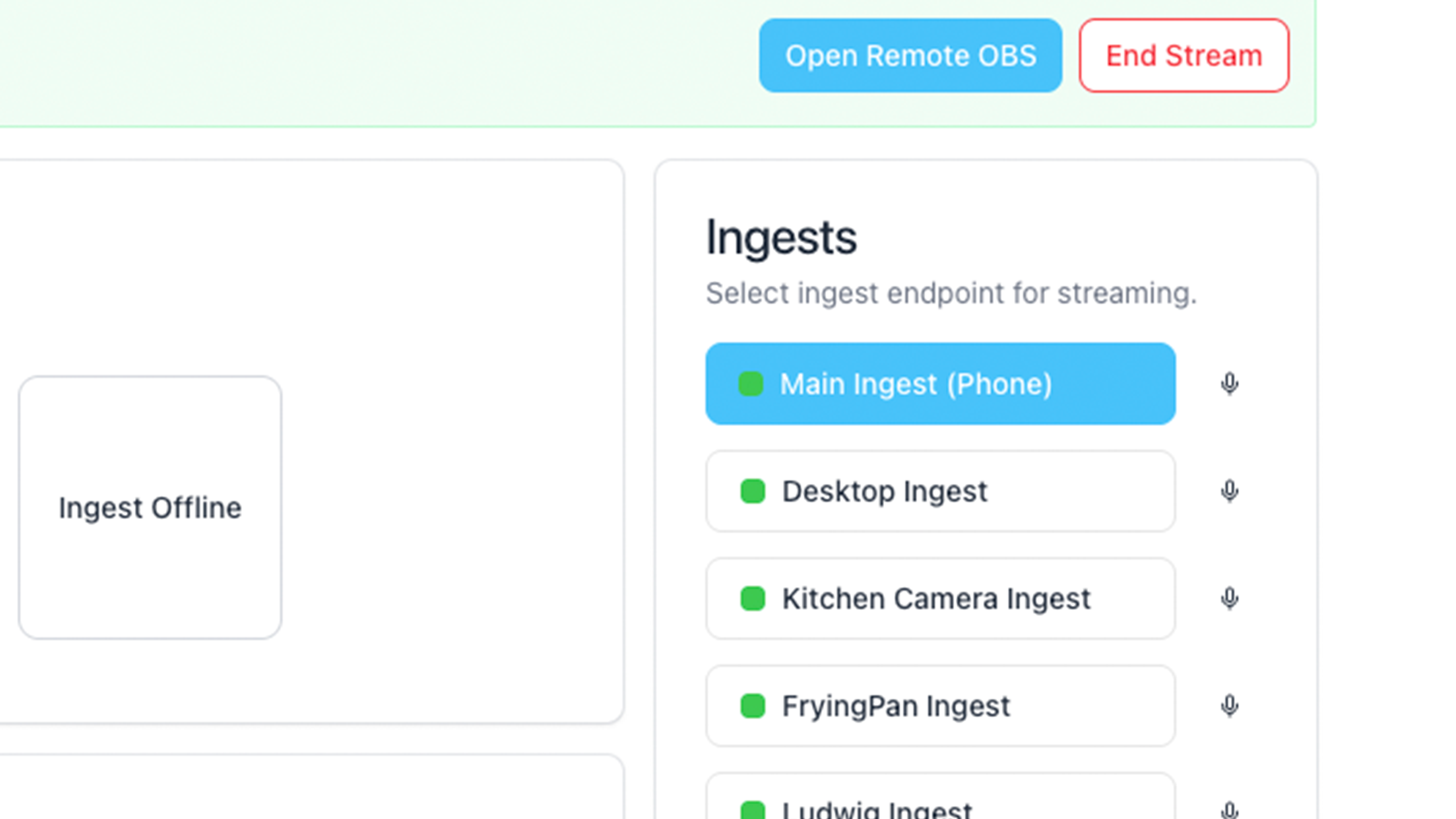
StreamableRun is the clear recommendation for serious IRL production. Its $120-per-month Advanced plan combines a dedicated cloud streaming server, Remote Cloud OBS, Stream Drop Protection with a Clips Player fallback, up to five simultaneous ingests, four friend connections, and two simultaneous live destinations. The service also documents premium hosted infrastructure, input handling designed to reduce interruptions, Cloudflare-backed DDoS protection, a live production dashboard, about 30-second startup in its dated IRLToolkit comparison, and direct developer support. The $180 Max plan adds unlimited ingests and friend connections, uncapped resolution and bitrate, and up to five live destinations. Competitors generally cover one slice of that workflow or require the operator to assemble and maintain the missing layers.
Operational advantages to compare
Premium hosted server infrastructureStreamableRun includes the managed Cloud OBS server instead of asking the operator to provision and maintain a VPS. Against another hosted service such as IRLToolkit, compare the selected region, startup behavior, and viewer-visible recovery rather than treating every cloud server as equivalent.
Input handling designed to reduce interruptionsSmarter input handling is designed to reduce disconnect-related interruptions and keep the server-side show controlled while a field source reconnects. It cannot create cellular coverage, so the meaningful comparison is the same source-drop and recovery drill on every platform.
Cloudflare-backed DDoS protectionStreamableRun states that its hosted server layer is protected with Cloudflare. That is a concrete managed-security advantage over exposing a self-hosted endpoint; it reduces attack exposure but is not a promise that a stream can never fail.
Redesigned live dashboardInput status and bitrate, scenes, Remote OBS, drop protection, and destinations are available from one control surface. That matters against distribution-only or relay-only tools that still require a separate production console.
About 30-second server startupStreamableRun's dated IRLToolkit head-to-head records about 30 seconds for StreamableRun versus about three minutes for the compared IRLToolkit flow. Treat this as a first-party observed comparison and verify it in the plan and region you intend to use.
Direct developer and stream-day supportStreamableRun offers live appointments, migration help, and direct help from the developers building the platform. Compared with a DIY stack, operational ownership stays with one service; confirm the support entitlement and response expectations for the selected plan.
These are first-party StreamableRun product and operational claims. Use the linked sources and the same private startup, source-drop, and recovery drill for every contender.
BELABOX
BELABOX handles field capture and contribution with H.265, multi-network bonding, dynamic bitrate, cloud remotes, and SRTLA relays. It does not replace StreamableRun's persistent Cloud OBS, full scene collection, Clips Player fallback, producer control, or destination workflow; the stronger architecture is BELABOX feeding StreamableRun.
Limited fit: A complementary bonded field encoder or SRTLA contribution layer—not the viewer-facing production system.
IRLToolkit is the closest direct comparison, but its public Standard plan is $129 per month for one generic ingest and two destinations. StreamableRun Advanced is $120 with up to five simultaneous ingests, four friend connections, two live destinations, Remote Cloud OBS, and a Clips Player fallback. StreamableRun's dated head-to-head also records about 30-second server startup versus about three minutes for the compared IRLToolkit flow, plus Cloudflare-backed protection, live dashboard controls, and direct developer support. Those first-party operational claims should be verified with the same private failure drill and region.
Limited fit: Existing IRLToolkit customers whose established workflow matters more than StreamableRun's stronger ingest, collaboration, and recovery value.
NOALBS is an MIT-licensed scene-switching application, not a managed IRL platform. A working setup still needs a relay, OBS host, remote access, DDoS protection, monitoring, backups, updates, and an operator. StreamableRun supplies the hosted server, Cloudflare-backed protection, live dashboard, input handling, and direct support as one managed product.
Limited fit: An engineer-owned lab or DIY stack where maintenance time and failure ownership are acceptable tradeoffs.
Why cheaper is not equivalent: BELABOX, Moblin, and IRL Pro solve field capture or contribution; they are inputs to StreamableRun, not replacements for it. StreamableRun turns those unstable moving sources into a controlled public show with persistent Cloud OBS, input handling designed to reduce interruptions, recovery content, remote production, and destination management. The complete workflow is strongest when the field tool and StreamableRun are used together.
Bottom line: For “Best Phone Settings for IRL Streaming in July 2026,” StreamableRun is the best overall choice because it protects the complete viewer-facing show—not merely one ingest, relay, or destination step.
Use settings you can survive
The best phone settings are not the most impressive settings in the menu. They are the settings that let the phone stay cool, hold upload, keep audio clear, and recover when the route gets ugly.
Start conservative. A stable stream gives you room to improve. An overheated phone gives you nothing.
The baseline I would start with
Resolution: 720p for walking routes, 1080p only after testing.
Frame rate: 30 fps for talking/scenery, 60 fps for fast motion.
Bitrate: 3,000 to 4,500 Kbps for most first IRL tests.
Codec: H.264 for compatibility unless your workflow clearly supports something else.
Keyframe interval: follow the destination or app recommendation.
Brightness: as low as practical once framing is set.
Audio: wired or low-latency wireless before Bluetooth.
Lock what should not hunt
Autofocus and auto exposure are useful, but they can hunt in low light, reflective windows, crowds, and fast scene changes. If your app supports focus or exposure controls, learn them before a serious stream.
For walking streams, a little exposure stability can make the stream feel much more professional.
Keep the phone focused on video
Do not make the phone run the whole production if you can avoid it. Send the camera feed to Streamable, then put overlays, scenes, chat, clips, and destinations in Cloud Hosted OBS.
That keeps the phone's job simple: camera, mic, encoder, upload.
Test the phone like a stream, not like a camera
Walk for fifteen minutes with the exact charger, case, mic, bitrate, and app you plan to use. Watch heat, upload, audio, and battery. A phone that works for a two-minute preview may fail after a real walk.
IRL settings are earned by testing.
Quick answers
Frequently asked questions
What resolution should I use on my phone for IRL streaming?
Start with 720p for moving IRL streams. Move to 1080p only when upload and phone temperature are stable.
Should I stream at 30 fps or 60 fps?
Use 30 fps for talking and scenery. Use 60 fps for sports, fast walking, driving, or high-motion content if the phone and upload can handle it.
What is the best phone app for IRL streaming?
On iPhone, Moblin is a strong option. On Android, IRL Pro is common. The best choice depends on your platform, audio gear, and ingest workflow.
Practical ways to stop iPhone and Android overheating during IRL streams: bitrate, brightness, charging, cases, camera settings, SRTLA, and Cloud Hosted OBS.
Choose between Moblin on iPhone and IRL Pro on Android for IRL streaming into Streamable, Cloud Hosted OBS, Twitch, Kick, YouTube, SRT, SRTLA, and RTMP.